1970Foundations
Move to the future NSS library
The investigation office relocated and carried forward its three pioneering sections while modernising workflows.
Our story
Police duties in the Maldives began nearly seven decades ago with only 120 officers safeguarding markets, islands, and livelihoods. The law signed on 29 March 1933 still underpins our mission today—keeping communities safe through discipline, partnership, and constant evolution.
Established
Royal law by Sultan Mohamed Shamsudhdheen III
Initial strength
Patrolling markets, islands, and communities
Legacy
Continuous national policing heritage
Foundation chapter
The law proclaimed on 29 March 1933 by Sultan Mohamed Shamsudhdheen III has never been repealed in any historical record. It firmly separated the Police and Military into two management structures, aligning Maldives with global standards of professional policing.
A modest investigation office with three desks handled theft, political, and serious-crime sections while the entire space wore signature green paint.
Officers donned Mundu and Libaas with black caps, belts, batons, and whistles—creating a distinctly Maldivian policing presence.
The founding law authorised military assistance whenever officers needed reinforcement during demanding patrols or arrests.
On 15 May 1933, police and military jointly resolved the tensions between foreign investors and Maldivians to restore livelihoods.
Service rituals
From receiving complaints at the gate to tracking suspects by hand-written slips, the early routines capture a disciplined and human-scale service.
Residents were greeted at the gate, briefed by the attending officer, and escalated to the senior duty officer—an approach that lasted until 11 November 1978.
Investigation teams wrote the suspect’s name on paper slips and dispatched patrol officers to escort the individual back to the office.
Police and Military operated under different management structures from day one, mirroring contemporary developed nations.
Islands we protect
The first officers worked in shifts, patrolling bustling markets and island communities. Their mandate was simple: keep citizens safe, safeguard belongings, and call the military if the situation required more hands.
When clashes between foreign investors and locals escalated, officers partnered with the military to end the standoff on 15 May 1933, underscoring the service's role as a stabilising force for trade and daily life.

Island patrols
Officers rotated shifts to guard markets and harbours.
Discipline & drill
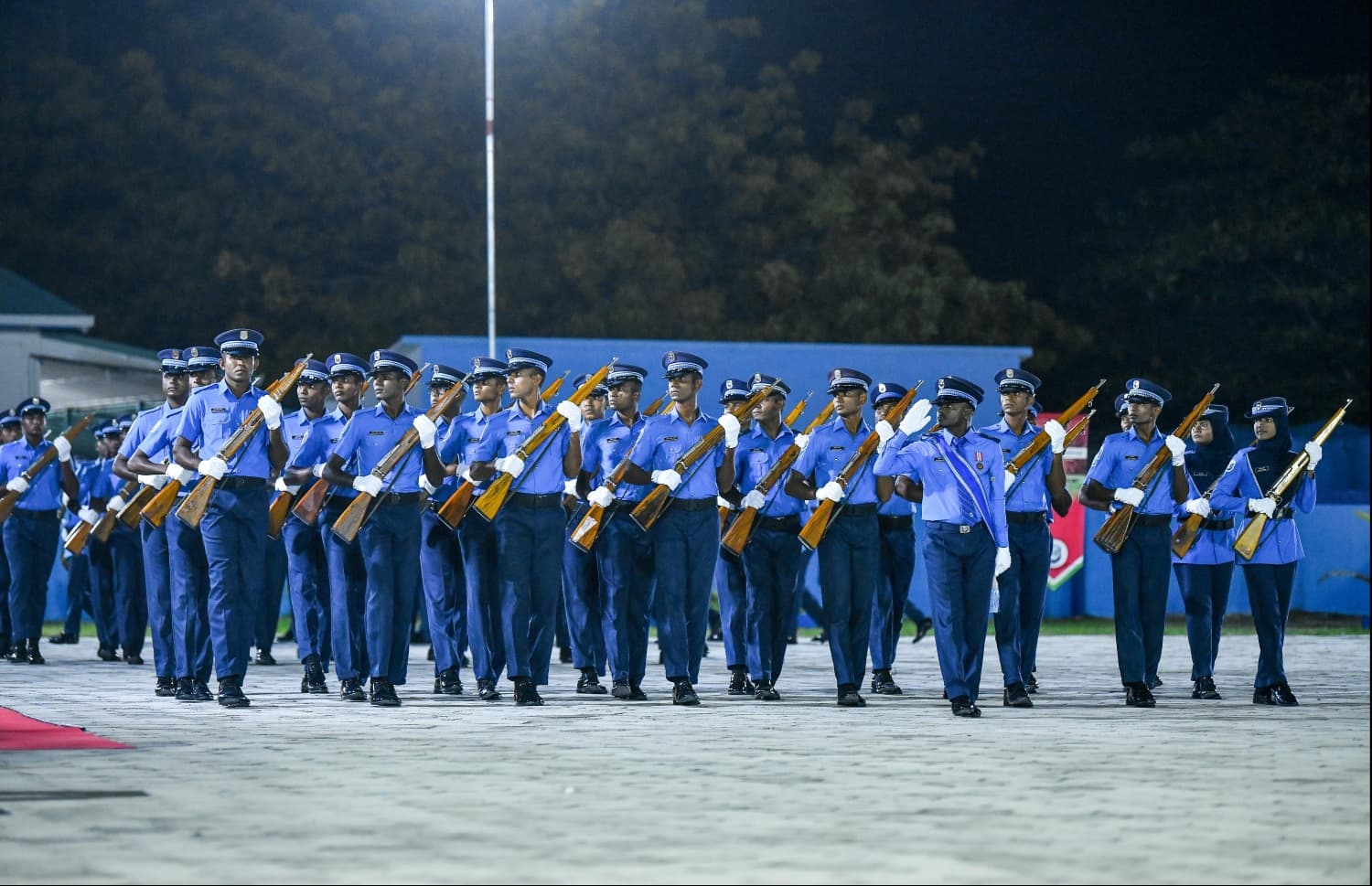
Early drill formations and ceremonial discipline defined the look and feel of the fledgling service.
Modern headquarters
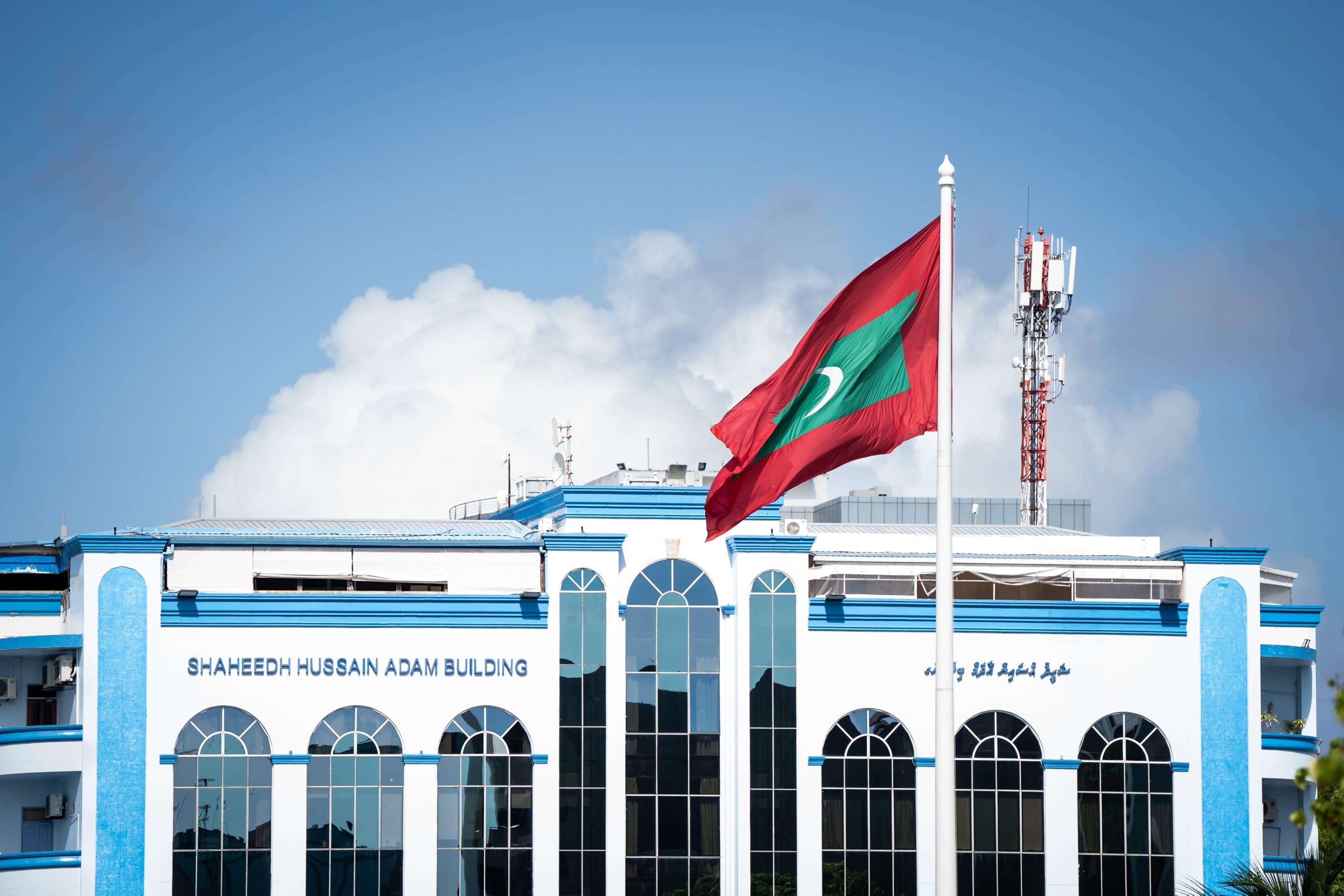
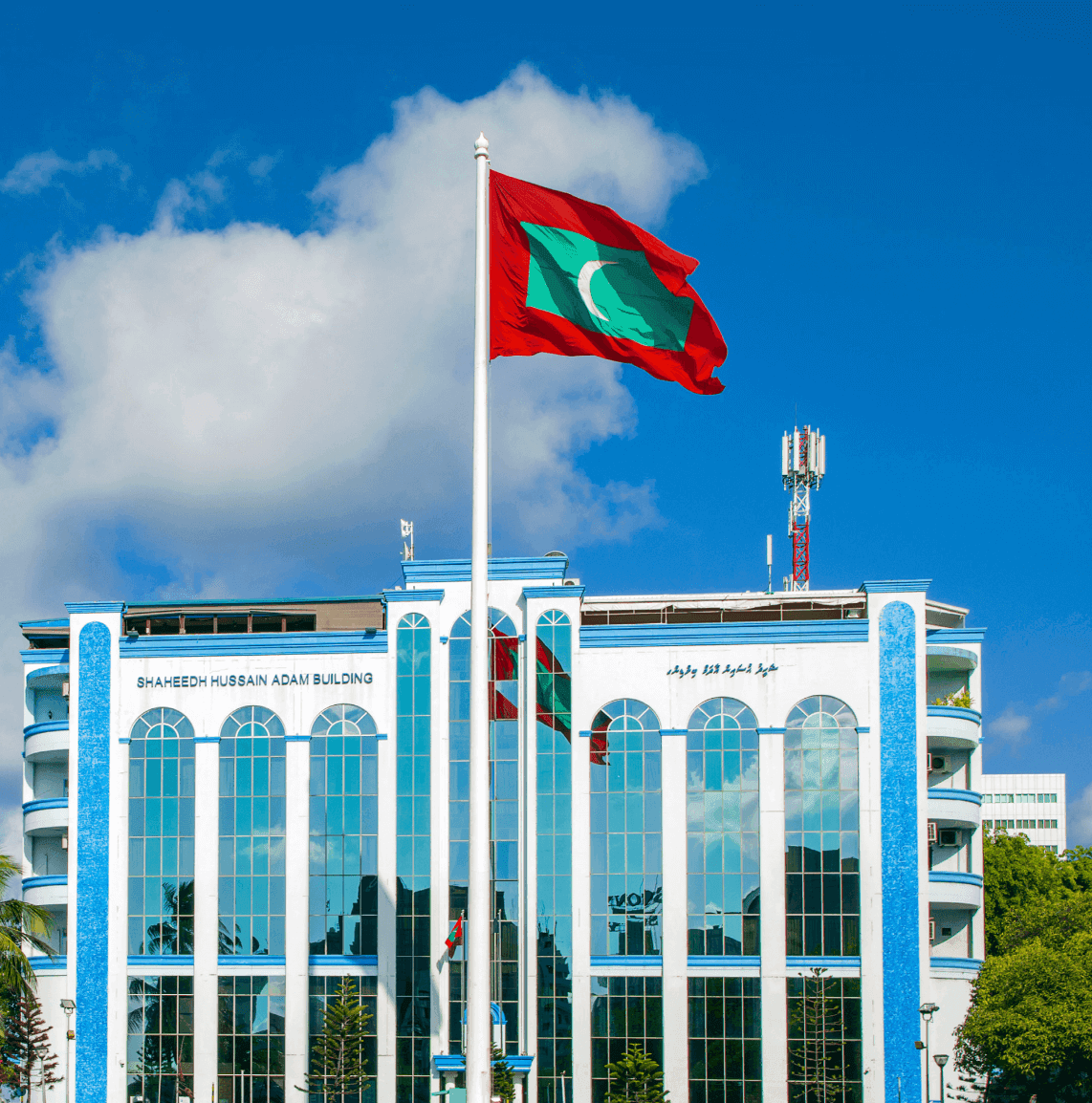
From the Green Office to Shaheedh Hussain Adam Building.
Keep exploring
Visit the pages below to meet our leadership, unpack our structure, and see how we recognise excellence across the Maldives Police Service.
Evolution timeline
From the 1970s Green Office move to the 2004 national service reform, every milestone expanded how we show up for every atoll and island community.
Legacy
The Maldives Police Service of today stands on decades of reforms—each relocation, training exchange, and organisational shift aimed at serving communities better on land and sea.
“Every officer who stood a market post, filed a complaint at the gate, or travelled between islands formed the foundation of our modern policing—rooted in community trust and national service.”
— Maldives Police Service archives
